
Introductory Video
About Us
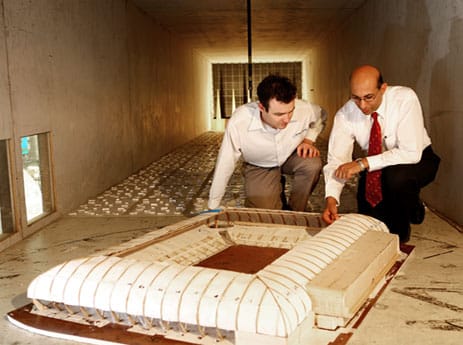
WINDTECH Consultants is an industry leading, global consultancy firm specializing in wind engineering, Building Physics and Computational Modelling, Sustainable Design, and Remote Monitoring services for owners, developers, architects, structural engineers and facade engineers around the world.
Through continual research and development, WINDTECH has built in-house capabilities across a broad spectrum of services. The team applies a flexible and progressive engineering approach with the objective of creating innovative, robust and accurate solutions that support the design process and reduce overheads for owners and operators.
Since the company's inception in 1991, WINDTECH has built a global presence with technical support offices across multiple locations and a portfolio of more than 3,000 major building projects across 35+ countries. This reflects the dedication of key staff with more than 150 years of combined experience in research, practical application and business operations.
WINDTECH's contribution extends beyond the office, with members active on standards committees and technical review committees, contributing to standards and guidelines within key engineering disciplines.
WINDTECH's wind engineering and bridges division maintains one of the largest boundary layer wind tunnel laboratories in the world, with three wind tunnels under one roof. Its building physics and Computational Modelling division has also developed significant capability using custom algorithms and super-computing resources that can distribute computations across more than 10,000 CPU cores.
Central oversight across the company's divisions helps maintain quality, consistency and reliability in engineering deliverables across the full breadth of service offerings.
Wind Tunnels
WINDTECH owns and operates one of the largest boundary layer wind tunnel laboratories in the world, with three wind tunnels under one roof. Each wind tunnel is 3.0m wide, 2.0m high and has a fetch length of 23m.
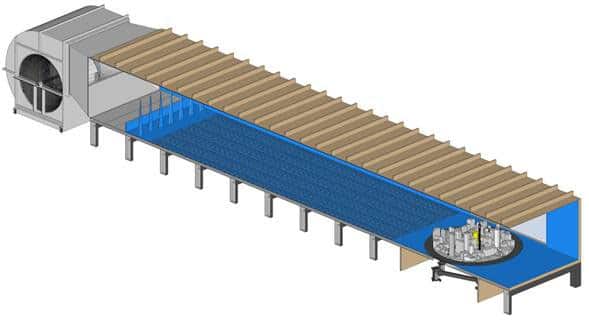
Technology included at WINDTECH's state-of-the-art labs includes:
- A large upwind plenum design and common air straighteners for low turbulence testing of bridge decks and sections.
- A blockage-tolerant test section to reduce potential blockage effects when models are larger than normal.
- High fidelity pressure acquisition and processing systems.
- Highly accurate systems for measuring site-specific wind speeds, including hot-wire and cobra sensors for reliable data in turbulent flows.
- High Frequency Force Balance, High Frequency Pressure Integration and Aeroelastic methods for determining wind-induced loads on tall buildings.
- Methods for long-span structures including Area Averaged and Load Response Correlation techniques.
- Advanced section model rigs for bridge deck and cable aerodynamics.
- Full-scale facade mock-up rigs for discharge coefficient, wind-noise, rain-noise and facade integrity testing.
- Rapid prototyping of wind tunnel models using in-house 3D printers and CNC machines.
- Smoke visualisation methods and live HD video broadcast for remote observation of testing.
Computational Fluid Dynamics (CFD)
Over the years, Windtech Consultants has built significant experience in harnessing CFD to model and test innovative, cost-effective solutions without detracting from the initial design intent.
Its CFD capabilities cover a wide range of environmental studies from early concept through detailed design. Rigorous validation against wind tunnel test data supports a robust approach, including pedestrian comfort studies suitable for planning applications and early design validation.
After physical modelling on more than 3,000 major building projects globally since 1991, Windtech recognises both the strengths and limitations of CFD. Where needed, CFD can be supplemented by physical testing to improve confidence and accuracy.
Because large transient CFD simulations can be computationally demanding, Windtech uses super-computing resources to achieve high accuracy while maintaining competitive lead times.
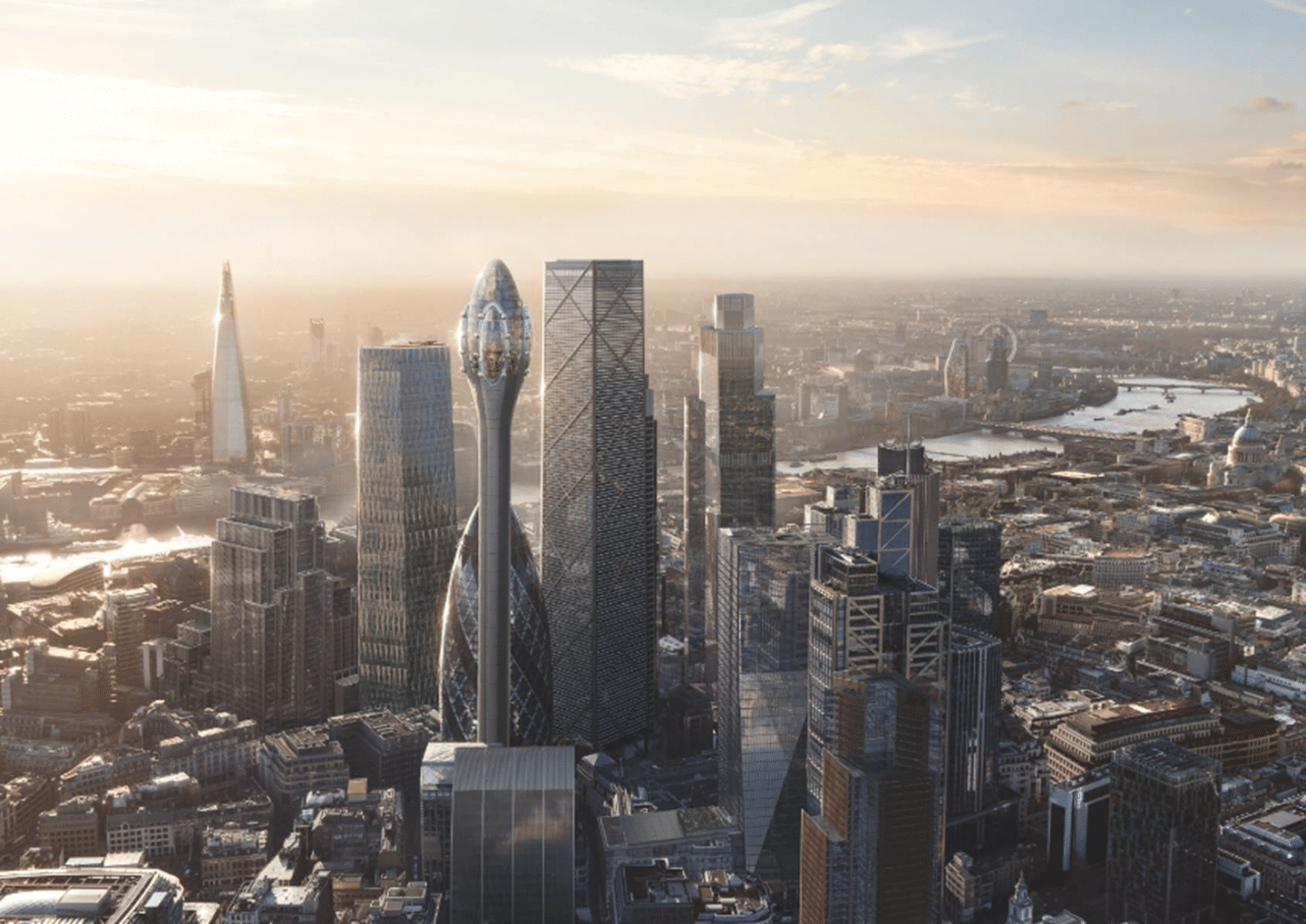
The Tulip, London - wind flow streamlines showing westerly wind impacting the building through the City of London central cluster.
Our Leadership Team: Global Wind Engineers
Windtech's reputation is supported by experienced wind engineers with hundreds of years of combined experience. Its leadership team brings deep technical understanding across wind engineering, wind tunnel testing and CFD, and contributes to standards, quality manuals and industry guidance.
Wind tunnel testing and Computational Fluid Dynamics are used to accurately model the effects of wind on buildings and the environment. Windtech's research-backed approach, technical proficiency and global project exposure place it at the forefront of wind engineering consultancy.
- Tony RofailDirector, Principal
- Aaron LefcovitchDirector
- Adam BrownettDirector
- Dr Nicholas TruongDirector
- Dr Niall O'SullivanTechnical Director
- Simon RonaldTechnical Director
- Dr Matthew VallisTechnical Director
Published Papers
Reliability of Wind Tunnel Techniques
- Quality assurance guidance for wind engineering studies of buildings.
- Statistical analysis of sampling and analysis parameters for wind tunnel loads.
- Reliability studies comparing wind tunnel results for cladding pressures.
- Full-scale and model-scale comparisons of wind pressures on test buildings.
Wind Loads on Facades and Facade Elements
- Inter-tenancy wall design for tall buildings with operable facades.
- Effects of facade features, sunshading, parapets, roof pitch, balustrades and attachments on wind pressure distribution.
- Comparisons between wind tunnel cladding pressures and code estimates.
Wind Tunnel Modelling Techniques
- High-frequency base balance methodologies for tall buildings with torsional and coupled resonant modes.
- Internal and net design pressure methodology for tall buildings with operable facades.
- Performance of blockage-tolerant boundary layer wind tunnel systems.
Environmental and Specialist Studies
- Natural ventilation in commercial, residential and car park developments.
- Wind noise, thunderstorm downbursts, solar reflectivity and wind-structure interaction.
- Wind climate analysis and wind environment criteria comparisons.
Projects
WINDTECH Consultants has undertaken wind tunnel tests since 1991 for more than 2,500 major projects, including a large number of landmark buildings.
- Australian ProjectsMajor buildings, stadiums, long-span roofs and mixed-use developments.
- Middle-East and Africa ProjectsCapital Plaza in Abu Dhabi, Signature Towers in Dubai, International Islamic Tower in Doha, Burj Rafal in Riyadh and other landmark developments.
- Asia ProjectsCapitaSpring Singapore and high-rise, commercial and civic projects across the region.
- UK ProjectsBuilding physics, CFD and wind engineering support for complex urban developments.
- Europe ProjectsWind tunnel and CFD studies for towers, transport, commercial and public realm projects.
- USA and CanadaWind loads, pedestrian wind comfort and facade studies for North American developments.
- Latin AmericanSpecialist wind engineering and environmental studies for regional projects.
FAQs
1. What is wind engineering?
Wind engineering studies the impact of wind on people, buildings and other man-made structures. It combines knowledge from meteorology, fluid mechanics and structural engineering.
2. Why is wind engineering important?
Depending on a development's location, height and form, designers may need to consider pedestrian wind comfort, facade pressures, structural loads and building motion. Good wind engineering helps architects and structural engineers refine building shape and design.
3. What benefits can wind engineering lead to?
Used well, wind engineering can reduce construction costs, reduce embedded carbon and help architects design outdoor spaces that are more comfortable throughout the year.
4. What structures can benefit from wind engineering?
Wind engineering can apply to bridges, buildings, towers, sculptures and other structures. It can also assess pollutant or odour diffusion and reduce re-entrainment impacts.
5. Is wind tunnel testing the only way to study wind effects?
No. Wind engineers mainly use wind tunnel testing and Computational Fluid Dynamics. CFD is useful for modelling flow behaviour and physics that may be difficult to capture in a tunnel, while wind tunnel testing remains the leading tool for many aerodynamic performance studies.
6. What is a wind tunnel?
A wind tunnel is a duct or tube with powerful fans and a test section where scaled models are placed. Sensors measure air velocity, pressure and other effects.
7. What type of testing does Windtech do?
Windtech carries out low and medium-speed wind tunnel testing for buildings and man-made structures, and also uses CFD to verify, validate and extend computer-aided simulations.
8. Why do we use wind tunnels?
Wind tunnels help determine wind loading on tall buildings, bridges, stadiums, special structures and transmission towers. They are also used for cladding pressure, pedestrian wind comfort, air quality, ventilation, dispersion and wind-driven rain studies.
9. When do we use CFD?
CFD is effective for environmental studies such as pedestrian wind comfort, thermal comfort and air quality analysis.
10. When is CFD not permitted?
CFD is generally not used as the sole basis for structural loads or wind-induced facade pressures. Code-based calculations or wind tunnel testing are typically required for those studies.
11. What certification or guidance can Windtech adhere to?
Windtech's techniques can align with global wind standards and code documents, including AS/NZS1170.2, ASCE 7, BS6399, ISO4354, IS875, EN1991-1-4, AWES-QAM-01 and ASCE/SEI 49-21.
12. What is force balance testing?
Force balance testing, often called HFB or HFFB testing, is used to determine wind-induced structural loads and responses for tall buildings using a balance at the base or inside the model.
13. What is High-Frequency Pressure Integration testing?
HFPI testing uses a model with distributed pressure ports. The simultaneous pressure measurements are integrated to determine overall wind loads and are often used for both structural load and facade cladding studies.